Word of the Day, October 22, 2026 – הרדמה (Anesthesia)
Word of the Day, October 22, 2026 – הרדמה (Anesthesia)
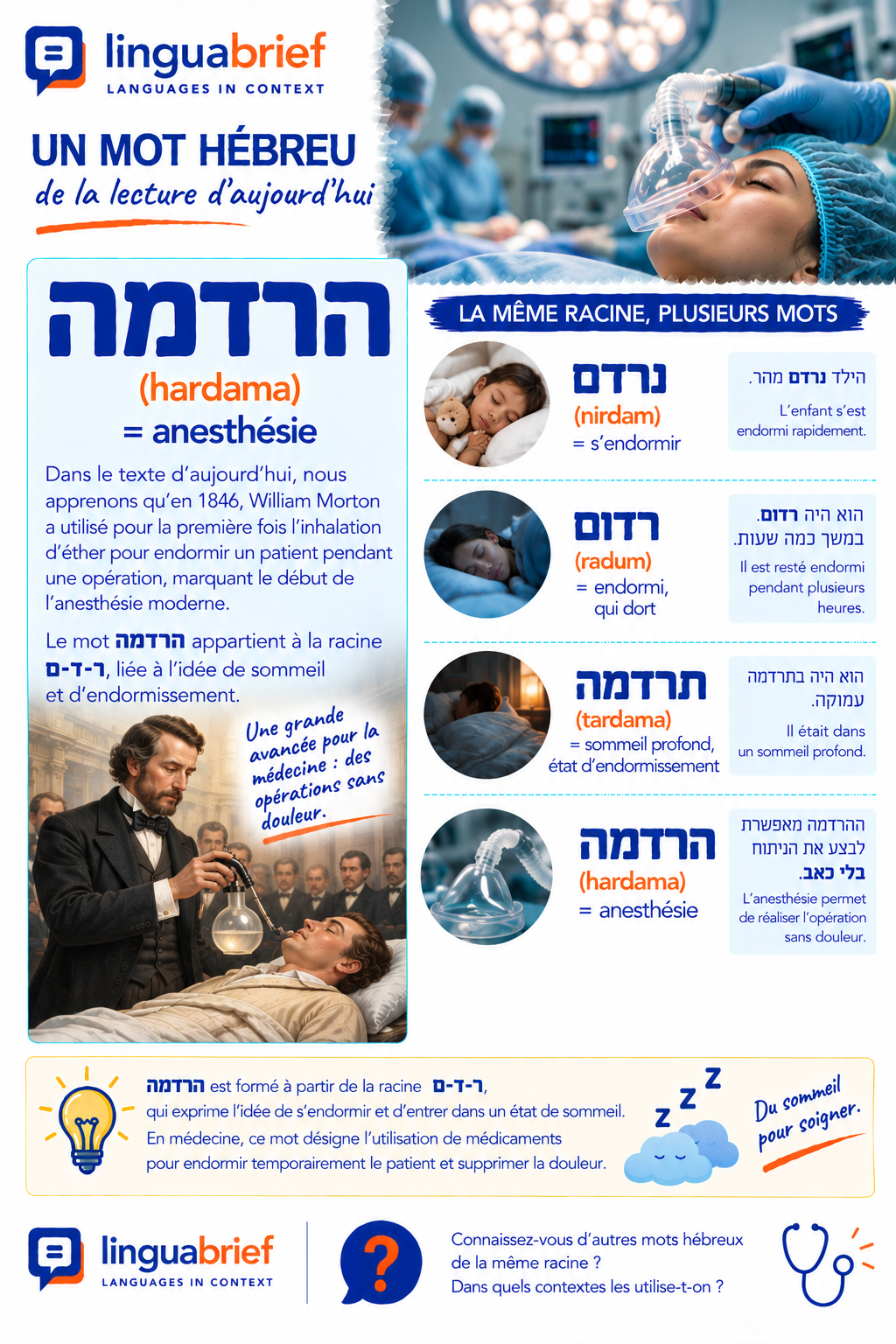
הרדמה — When Medicine Puts Us to Sleep
A Hebrew word from today's reading: הרדמה (hardama) — anesthesia.
Back in 1846, American dentist William Morton gave a public demonstration of ether anesthesia during a surgery in Boston. This moment changed the course of surgical history: for the first time, patients could undergo operations without the agony of pain.
But why does Hebrew use the word הרדמה for anesthesia?
The answer lies in the root ר־ד־ם (R-D-M), which is linked to sleep and falling asleep.
You can spot this root in several words:
- נרדם (nirdam) — to fall asleep
- רדום (radum) — asleep, drowsy
- תרדמה (tardema) — deep sleep, torpor
- להרדים (lehardim) — to make someone fall asleep
- הרדמה (hardama) — anesthesia
It's a fascinating connection.
נרדם refers to a person falling asleep.
להרדים means to put someone to sleep.
And הרדמה is used medically for anesthesia—a set of techniques for eliminating pain during a procedure, sometimes by causing a loss of consciousness.
But this word family is actually much older than modern medicine.
In the Bible, תרדמה means a deep sleep, sometimes brought on by God.
For example, in Genesis (2:21), God causes a תרדמה to fall upon Adam before taking one of his ribs.
The Hebrew text says:
ויפל יהוה אלהים תרדמה על האדם ויישן
"The Lord God caused a deep sleep to fall upon the man, and he slept."
Of course, this isn't anesthesia in the modern medical sense, but the similarity is striking: in both cases, someone is deliberately put into a state of sleep or unconsciousness.
Modern Hebrew has borrowed this ancient word family to name a milestone in medical science.
From biblical sleep to modern anesthesia: one root, ר־ד־ם.
Did you know about this link between the language of biblical sleep and modern medicine?